

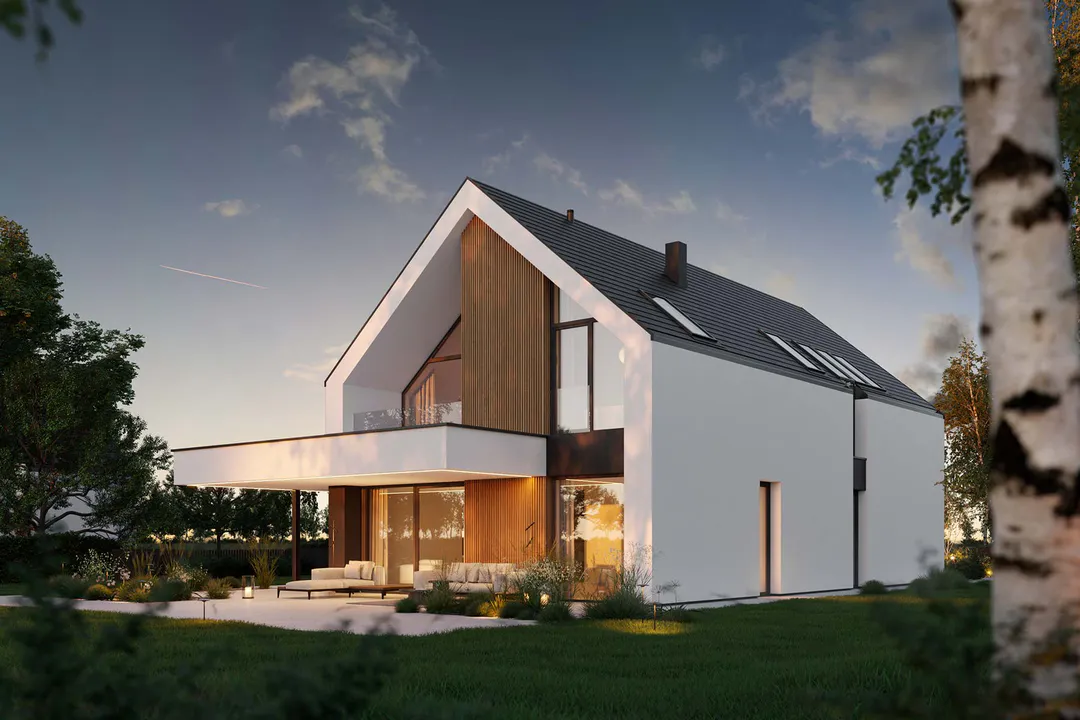
Everything You Need to Know Before You Buy
Introduction
Purchasing a home is one of the largest investments most people make, both financially and emotionally. In the European context — especially in Germany and Austria — strict building codes, energy directives, and sustainability goals shape the housing market. Prefab timber houses (Fertighäuser) are increasingly seen not only as affordable, but as high-performing, eco-friendly, and future-ready homes.
This guide brings together legal norms, market research, and technical expertise, while providing practical buyer advice at every step. The aim: to help you make an informed and confident decision.
1. Understanding Prefab Timber Houses
Overview
Prefab timber houses are factory-engineered buildings made of wood-based components, assembled on-site in a matter of days. They combine architectural flexibility with high precision and sustainability.
Key Standards
- Germany: DIN 1052 (timber construction), GEG 2020 (energy law).
- Austria: ÖNORM B 2320 and OIB Guidelines.
- EU: EPBD (Energy Performance of Buildings Directive) for nearly zero-energy standards.
Market Insight
In 2024, over 23% of new single-family houses in Germany were prefab timber homes (source: BDF).
Practical Buyer Tips
- Always ask the provider if their system is certified under BDF or ÖFV.
- Visit a model home to experience the indoor climate — many clients notice the difference in air quality immediately.
- Request a list of reference projects; it’s the best proof of reliability.
2. Legal and Regulatory Framework
Permits and Laws
- Germany: Landesbauordnungen (LBO) differ per state.
- Austria: Each province has its own Bauordnung.
- Fire Safety: DIN EN 13501-2 classification up to F90 possible.
- Soundproofing: DIN 4109.
Energy Efficiency Requirements
The EU EPBD requires all new builds to be nearly zero-energy. Prefab timber houses usually overperform here thanks to wall technology.
Practical Buyer Tips
- Ask if the provider handles the Bauantrag (building permit). It saves you months of stress.
- Verify compliance with GEG 2020 or Austrian OIB. Penalties exist for non-compliant construction.
- Ensure the provider guarantees a blower door test for airtightness.
3. Financial Planning and Budgeting
Costs
Prefab houses often have fixed-price guarantees, unlike traditional builds.
Financing
- Germany: KfW loans (Effizienzhaus 40 Plus).
- Austria: Wohnbauförderung subsidies for energy-efficient homes.
Insurance
Essential policies include Bauherrenhaftpflicht and Bauleistungsversicherung.
Practical Buyer Tips
- Always calculate an extra 10% buffer for landscaping, permits, and furniture.
- Apply early for subsidies — some regions have limited annual budgets.
- Compare financing banks that specialize in prefab houses (often lower risk = better rates).
4. Energy Efficiency and Thermal Performance
Thermal Standards
- GEG requirement for walls: 0.24 W/m²K.
- Modern prefab walls: 0.12–0.15 W/m²K.
Systems Offered
- Efficiency Wall 40 Plus – optimized for KfW 40 Plus standard.
- Passive House Wall – certified by Passivhaus Institut Darmstadt.
Heating and Comfort
- Underfloor heating = even warmth.
- Integration with heat pumps, PV, and smart home controls.
Practical Buyer Tips
- Ask for a thermal bridge calculation — it avoids future mold problems.
- Always check U-values on paper, not just in marketing brochures.
- Consider floor cooling (via heat pump) — it’s a hidden comfort upgrade.
5. Speed of Construction and Quality Assurance
Timeline
- Masonry: 12–18 months.
- Prefab timber: 6–8 months (sometimes less).
Quality
- Factory-controlled, ISO 9001 certified.
- Weather-independent production = no delays.
Durability
- Timber houses last 80–100 years+ (Fraunhofer IBP studies).
Practical Buyer Tips
- Ask for the factory production tour — serious providers will allow it.
- Demand a construction timeline guarantee in writing.
- Clarify how weather risks (rain, storms) are handled during assembly.
6. Design Flexibility and Smart-Home Integration
Architecture
From cubic Bauhaus to alpine pitched roofs — prefab allows almost full customization.
Smart Tech
- KNX/EIB standard, app-controlled heating, lighting, and shading.
- Integration with PV and battery storage.
Wellbeing
Timber regulates humidity naturally (IBP confirms improved indoor climate).
Practical Buyer Tips
- Ask for BIM (Building Information Model) files if you work with external architects.
- Future-proof by pre-installing conduits for EV chargers and solar systems.
- Choose flexible floor plans — resale value is higher.
7. Sustainability and Environmental Impact
Eco Benefits
- A 150 m² timber house stores ~30 tons CO₂.
- FSC/PEFC-certified timber ensures sustainable forestry.
- Timber elements recyclable per EU Circular Economy plan.
Practical Buyer Tips
- Ask for a CO₂ footprint report with your offer.
- Check if your provider uses regional wood — reduces transport emissions.
- Opt for natural insulation materials (wood fiber, cellulose) for added eco benefits.
8. Risks and How to Mitigate Them
Potential Risks
- Moisture issues if detailing is poor.
- Non-certified providers may cut corners.
- Contractual loopholes in payment schedules.
Mitigation
- Vapor barrier protection (DIN 68800).
- Membership in BDF/ÖFV as quality assurance.
- Contracts per VOB/B (Germany).
Practical Buyer Tips
- Never pay more than 10% upfront.
- Ask for a construction insurance certificate before signing.
- Request a list of subcontractors — it shows transparency.
9. Advantages of Choosing Our Company
- Certified Wall Systems (Efficiency Wall 40 Plus, Passive House Wall).
- Smart Home Ready with underfloor heating, KNX, PV integration.
- Rapid Construction within 6–8 months.
- ISO-certified Quality production under EU norms.
- Full-Service Support from permits to financing.
Practical Buyer Tips
- Book a consultation early — design slots fill quickly.
- Ask about seasonal promotions (e.g. contracts signed before end of 2025 with bonuses).
Conclusion
Buying a prefab timber house is about more than shelter. It is about securing a future-ready home that meets the highest energy standards, ensures long-term savings, and provides comfort through technology and design. With careful planning and the right provider, buyers can avoid pitfalls and enjoy the benefits of rapid, sustainable, and smart construction.
How much would your house really cost?
Explore ready-made house models or calculate your construction cost in just a few clicks. No commitment. Full transparency.
- ✔ Fixed price ranges
- ✔ Adapted to your land & requirements
- ✔ Delivery possible in 4–6 months
Free • No obligation • Response within 24h